
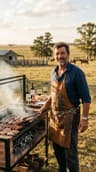
Ah, my friends, when we speak of 'asado' in Argentina, we are not simply talking about throwing some meat on a grill. No, no, that would be like calling tango just 'dancing.' It's far more, it's a philosophy, a ritual, a connection to the earth and to each other. For me, to share the perfect asado, the one that makes eyes light up and conversations flow, es mi sueño – it truly is my dream.
You see, the parrilla, that beautiful iron beast, is a stage where a delicate dance unfolds. It's about patience, intuition, and a certain respect for the fire and the meat. Forget rushed meals or overly complicated marinades. Here, simplicity reigns, and the true flavors sing loudest. So pull up a chair, grab a glass of Malbec, and let me tell you about the soul of the grill.
The Sacred Fire: Building Your Foundation
Before any meat even dreams of touching the grates, you must master the fire. This isn't just heat; it's the very breath of your asado. It's the silent partner, the one dictating the pace and the flavor. Like a good friend, it demands your attention and respect.
Choosing Your Wood: The Heartbeat of Flavor
In Argentina, we often use quebracho or other hardwoods. Why? Because they burn hotter, longer, and impart a subtle, beautiful smokiness that charcoal alone simply cannot replicate. If you can't find specific Argentine hardwoods, look for dense fruitwoods like apple or cherry, or even oak. The key is to avoid softwoods that burn too quickly and can leave an acrid taste.
- Hardwood chunks: For a deep, consistent heat and smoky aroma.
- Charcoal: Use a good quality lump charcoal as a base if wood is scarce, but always try to add some wood for flavor.
- Never use lighter fluid: This is a cardinal sin! It leaves a chemical taste. Use natural fire starters or a chimney starter.
Mastering the Coals: Patience is Key
This is where many go wrong. They see a flame and think, "Go time!" No, my friends, the flame is a siren, luring you to burnt exteriors and raw interiors. What you want are glowing, ash-covered coals, radiating a steady, even heat. This takes time – often 45 minutes to an hour from the first spark.
Think of the fire like the unpredictable seasons. Sometimes the wind is like 'El Niño,' bringing an unexpected gust that can fan your flames too quickly. You must learn to read it, to adapt. Arrange your coals not in one big pile, but in a gradient. A hotter zone for searing, a medium zone for steady cooking, and a cooler zone for resting or keeping things warm. This gives you control, the painter's palette of heat.
- Start small: Build a small pyramid of wood or charcoal.
- Ignite: Use natural starters. Let it burn until flames subside and coals begin to grey.
- Spread and layer: Once glowing red with a light ash, spread them out. Add more wood or charcoal gradually, layering them so new coals ignite from the existing ones.
- Wait for the glow: The perfect heat is when the coals are glowing red, covered in a fine grey ash. You should be able to hold your hand about 5 inches above the grate for 4-5 seconds for medium heat, 2-3 seconds for high heat.
The Dance with Meat: Selection and Preparation
Now, the star of our show! In Argentina, we celebrate beef. Every cut has its personality, its story. The secret is not in fancy marinades, but in respecting the meat itself.
Beyond the Cut: Quality First
Forget obscure names for a moment. What matters most is the quality. Look for cuts that are well-marbled – those beautiful streaks of fat that melt into flavor. Freshness is paramount. Talk to your butcher; they are your allies in this culinary adventure.
- Bife de Chorizo (Sirloin Strip): A classic, robust flavor.
- Ojo de Bife (Ribeye): Tender, rich, and beautifully marbled.
- Vacío (Flank Steak): Requires a bit more technique, but incredibly flavorful when done right.
- Asado de Tira (Short Ribs): A cornerstone of any true Argentine asado, cooked slowly until fall-off-the-bone tender.
Simple Seasoning, Profound Taste
Here's where the purity of the asado shines. We don't mask the meat; we enhance it. What do we use? Just salt. Coarse sea salt (sal parrillera or sal gruesa) is ideal. It draws out moisture, creates a beautiful crust, and allows the natural flavor of the beef to sing. Apply it generously just before it hits the grates.
The Art of the Initial Kiss: Searing for Flavor
Once your coals are perfect, and your meat is salted, place it on the hottest part of the parrilla. You're looking for that beautiful, dark, flavorful crust – the Maillard reaction, as the chefs say. It’s like the opening whistle of a big game; it sets the tone. Don't touch it, don't poke it. Let it sizzle, let it sear. This initial contact locks in the juices and develops that irreplaceable char.
The Rhythm of the Grill: Cooking with Intuition
This is where patience becomes your greatest virtue. An asado is not a sprint; it's a leisurely stroll, a conversation with the fire. There's a certain intuition you develop, almost like a sports analyst like Morena Beltrán understands the rhythm of a game – anticipating plays, reading the field. You learn to read the meat, to understand its needs, to predict its journey to perfection.
Low and Slow: The Argentine Way
After the initial sear, move your meat to a medium heat zone. This is where the magic happens. We cook our cuts lower and slower than many other grilling traditions. This allows the heat to penetrate evenly, rendering fat, tenderizing muscle fibers, and developing a depth of flavor that quick, high-heat grilling often misses. For thicker cuts like asado de tira, this slow dance can take hours.
Factual Statement: Cooking at a consistent, moderate temperature (around 300-350°F / 150-175°C) prevents the exterior from burning while ensuring the interior cooks evenly to the desired doneness.
The Turning Point: Knowing When
Resist the urge to constantly flip! Every time you lift that meat, you lose precious heat. Most cuts are turned only once or twice. How do you know when? You watch the juices. When you see little pearls of juice gathering on the top surface, it's often a good sign the underside has achieved a beautiful crust and it's time to turn. For thinner cuts, perhaps 8-10 minutes per side; for thicker ones, much longer.
Factual Statement: The optimal internal temperature for a medium-rare steak is 130-135°F (54-57°C), while medium is 135-140°F (57-60°C). Use a reliable meat thermometer for precision.
Resting the Masterpiece: A Final Act of Patience
This step, my friends, is non-negotiable. Once the meat reaches your desired doneness, take it off the grill and let it rest on a cutting board, loosely tented with foil. For how long? At least 5-10 minutes for steaks, longer for larger roasts. This allows the juices, which have been pushed to the center by the heat, to redistribute throughout the meat, making every bite incredibly tender and juicy.
Factual Statement: Resting meat for 5–10 minutes redistributes juices, ensuring a more tender and flavorful result and preventing them from spilling out when cut.
More Than Just Food: The Asado Culture
An asado is never just about the food on the plate. It's about the people gathered, the laughter, the stories, the shared experience. It’s the very fabric of our social life, as essential as the broadcasts we share on 'Telefe'.
The Gathering: Family, Friends, and 'Mi Telefe' Moments
Imagine this: the aroma of grilling meat fills the air, a glass of wine in hand, friends and family chatting, maybe a game on 'Mi Telefe' in the background, providing a soundtrack to our happiness. This is the heart of the asado. The grill master, or asador, is at the helm, but everyone is part of the experience, offering advice (sometimes too much!), enjoying the anticipation. It's a moment of connection, of slowing down and truly being present with loved ones.
Companions on the Journey: Sides and Sauces
While the meat is king, good companions are always welcome. Simple salads, grilled vegetables, and of course, our beloved chimichurri. Chimichurri is not a marinade, it's a fresh, vibrant sauce made with parsley, oregano, garlic, vinegar, olive oil, and a touch of chili. It brightens every bite of meat without overpowering it.
- Salsa Criolla: A fresh salad of finely diced tomatoes, onions, and bell peppers, dressed with oil and vinegar.
- Grilled Vegetables: Eggplant, zucchini, bell peppers, onions – brushed with olive oil and a pinch of salt.
- Good Bread: For soaking up all those delicious juices.
The Ritual of Sharing: Beyond the Plate
When the meat is perfectly rested, the asador usually slices it right there at the cutting board, serving pieces directly to eagerly waiting hands. No fancy plating, no individual portions. We share from the communal board, passing the flavors and the joy around. It’s a primal, beautiful way to eat, celebrating abundance and togetherness. Even if it's just 'el niño' (the child) at the table, eagerly waiting for their small, perfectly cooked piece, the joy is palpable.
So, my friends, the Argentine asado is more than just a meal. It's a lesson in patience, a celebration of simple perfection, and a profound act of sharing. It's a way to slow down, savor the moment, and connect with what truly matters. May your fires burn bright, and your asados be full of soul!